
2026-2030 Strategic Direction
The Canadian impact investing field has matured faster than the shared understanding of how it works. Practitioners are deploying capital and managing portfolios. But funders, intermediaries, and policymakers are often working from different definitions of what success, risk, and good practice look like.
That gap has real costs: misaligned expectations, funder hesitation, and policy that compensates for uncertainty rather than building on evidence.
TIIP’s role is translation. We synthesize what practitioners are actually doing and make it legible — to practitioners as peer learning, and to funders and policymakers as a shared reference for the field.
Our North Star
TIIP translates Canadian impact investing practice — enabling practitioners to learn from each other, and giving funders, policymakers, and partners a shared reference for understanding the field, so that capital, policy, and practice can align around what actually works.
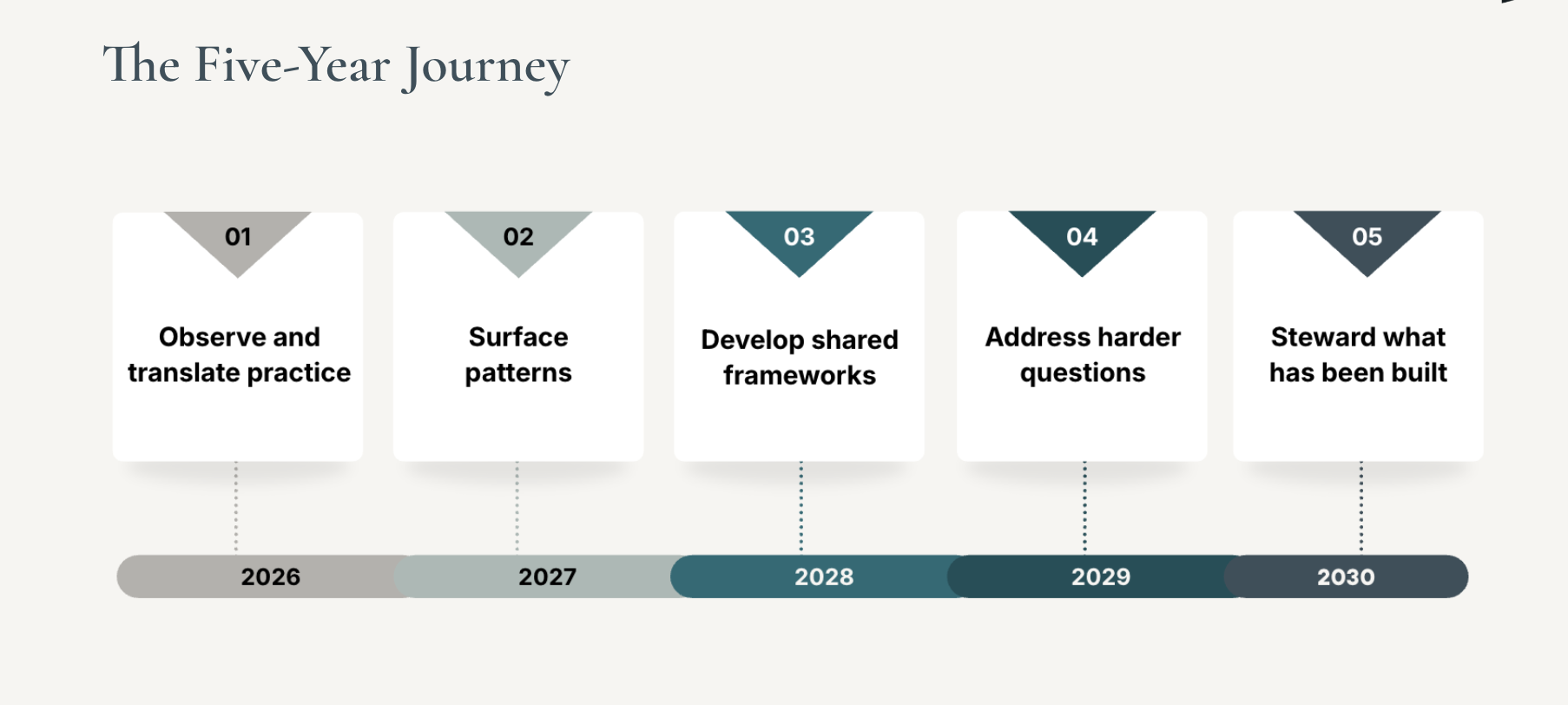
The Five-Year Arc
This plan follows a five-year arc, each stage building on the last.
In 2026, we deepen the foundation — staying close to operating practice and building the evidence base through Knowledge Exchange and the State of Impact Investing. In 2027, we surface patterns: making recurring dynamics visible so the field can discuss them in common terms. From 2028 onward, we translate that accumulated insight into shared frameworks — common terminology, practice descriptions, and readiness markers that reduce coordination cost. By 2030, the goal is a stable, predictable resource the field can rely on.
The arc is a direction, not a fixed sequence. TIIP’s work will adapt to where the field actually is.
Read the Plan
The 2026–2030 Strategic Plan was approved by the Board of Directors in January 2026. It was developed through extensive engagement across the ecosystem, including a research partnership with Propel Impact, one-on-one conversations with members and partners, and the insights generated through the Knowledge Exchange pilot.
Questions or reactions? We welcome feedback from members and field partners. Reach us at [email protected].